
- Minisgreat
- No Comments
- August 7, 2026
Resin, Tarmac or Block Paving? Which Surface Wins?
Choosing a new surface for a driveway, commercial entrance, car park or private access road can quickly become confusing. Resin bound surfacing, tarmac and block paving can all produce an attractive finished area, but they behave very differently once exposed to British weather, vehicles and everyday use.
The cheapest surface at installation is not necessarily the cheapest over its entire lifespan. Equally, the most attractive option may not be appropriate for an area regularly used by heavy commercial vehicles.
When comparing resin vs tarmac vs block paving UK property owners therefore need to consider more than appearance. Durability, drainage, maintenance, traffic levels, installation requirements and long-term value should all influence the decision.
So, which surface actually wins?
Tarmac: The Practical All-Rounder
Tarmac remains one of the most familiar surfacing materials in the UK, and there is a good reason for its popularity. A properly constructed tarmac surface is strong, relatively quick to install and capable of handling significant levels of vehicle traffic.
It is particularly well suited to access roads, commercial car parks, industrial premises and larger driveways where durability is more important than decorative detailing.
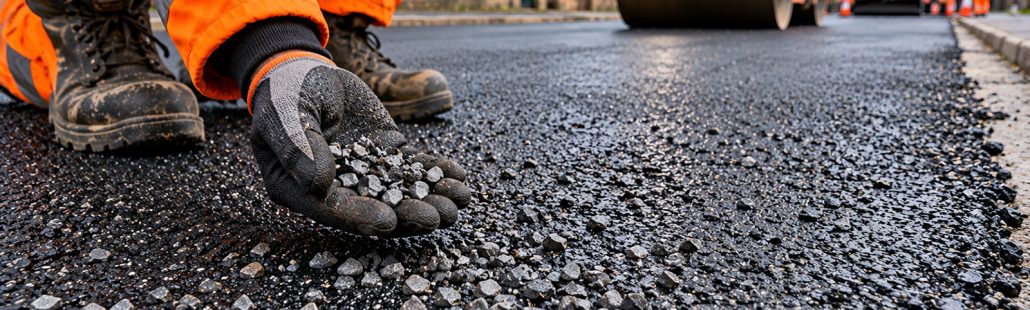
Professional tarmac installation involves much more than simply applying a black surface layer. The performance of the finished pavement depends heavily on groundwork, sub-base construction, drainage, asphalt specification and compaction.
When those elements are correct, tarmac provides a dependable surface capable of delivering years of service.
Where Tarmac Performs Best
One of tarmac’s biggest advantages is its ability to cover relatively large areas efficiently. On substantial sites, specialist machinery can create a consistent surface without the labour involved in individually placing paving blocks.
For large commercial areas, machine lay tarmac can provide particularly efficient installation and consistent compaction.
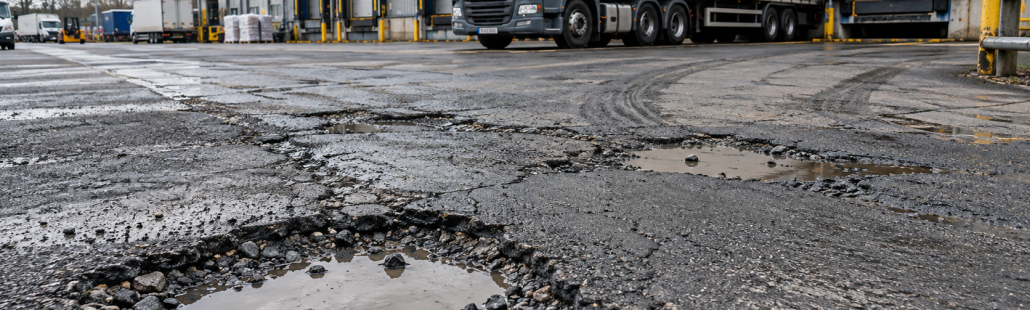
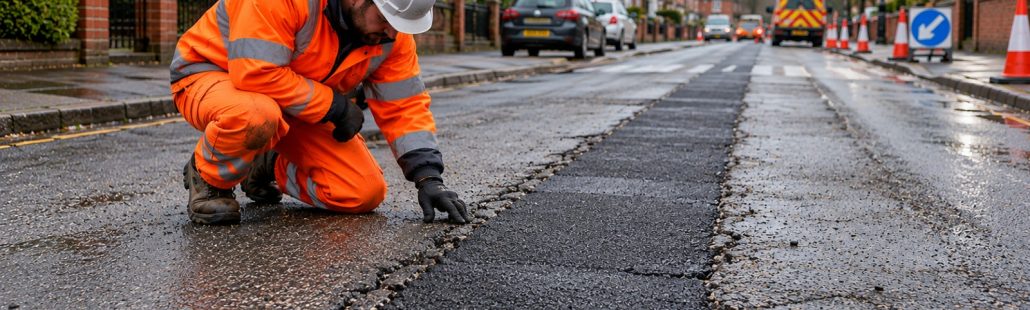
Tarmac is also comparatively easy to repair. If localised damage develops, affected areas can often be removed and replaced without reconstructing the entire surface.
The compromise is primarily aesthetic. While clean new tarmac can look extremely smart, it does not provide the same range of colours and decorative finishes available with resin or block paving.
Resin Bound Surfacing: The Appearance Winner
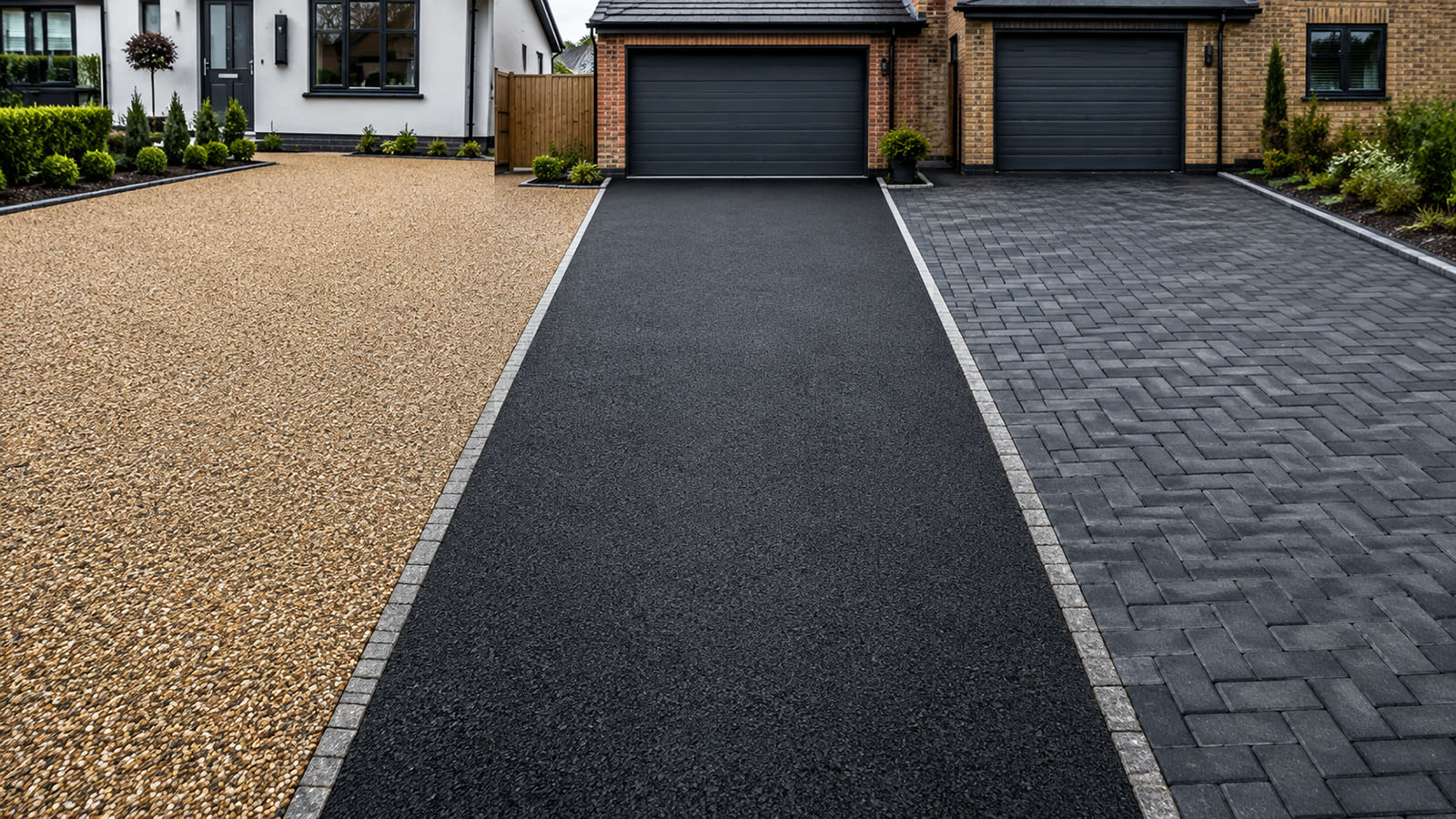
Resin bound surfacing has become increasingly popular with UK property owners seeking a more decorative finish.
The system combines aggregate with resin before the mixture is laid and hand-finished to create a smooth, seamless surface. Different aggregate blends allow the finished area to complement surrounding buildings, landscaping and architectural styles.
Professionally installed resin bound surfacing can be particularly effective for driveways, pathways, courtyards and customer-facing commercial entrances.
For properties where first impressions matter, resin has a clear advantage.
Resin Has a Practical Drainage Benefit
Appearance is not resin bound surfacing’s only strength. A correctly specified resin bound system can be permeable, allowing water to pass through the surface rather than simply running across it.
That can help reduce standing water and support an effective drainage strategy when the complete construction beneath the resin is designed appropriately.
This is particularly valuable in the UK, where prolonged periods of rainfall can expose weaknesses in poorly drained driveways and external areas.
However, the fact that the resin layer itself can be permeable does not mean drainage can be ignored. The base and surrounding levels still need to be properly designed.
Where Resin May Not Be the Best Choice
Resin is not automatically the best option simply because it offers a premium finish.
The surface needs a suitable, stable base. Installing resin over cracked, moving or poorly prepared groundwork can result in problems later.
The intended traffic also matters. A domestic driveway carrying cars has very different structural requirements from an industrial yard regularly used by HGVs, forklifts and delivery vehicles.
For heavily trafficked commercial environments, a correctly designed asphalt construction will often be the more practical choice.
Block Paving: Maximum Design Flexibility
Block paving offers something neither tarmac nor resin can replicate in quite the same way: individual units that can be arranged into different colours, shapes and patterns.
This makes it particularly attractive for residential driveways, landscaped developments and entrances where traditional character or architectural detailing is important.
Different blocks can also be used to create borders and distinguish parking or pedestrian areas without relying entirely on painted markings.
For appearance and design flexibility, block paving remains a strong competitor to resin.
The Maintenance Question with Block Paving
The individual joints that give block paving its distinctive appearance can also increase maintenance requirements.
Over time, debris can accumulate between blocks and vegetation may become established if the area is not maintained. Jointing material may also require attention, particularly after intensive cleaning.
Movement within the foundation can cause individual blocks to settle, producing an uneven surface.
The advantage is that damaged blocks can often be lifted and replaced individually. Underground services can also sometimes be accessed before the original blocks are reinstated, avoiding the obvious repair patches that can occur with continuous surfaces.
Which Surface Handles Heavy Traffic Best?
For demanding commercial environments, tarmac generally has the strongest case.
A properly designed asphalt pavement can be constructed specifically for expected vehicle loads, making it suitable for access roads, industrial estates, service areas and busy car parks.
This is why commercial surfacing requires the intended use of the site to be considered before materials are selected.
A surface carrying occasional cars should not be specified in exactly the same way as one receiving regular articulated lorries.
Resin and block paving can both accommodate vehicle traffic when correctly designed, but the complete pavement construction must be appropriate for those loads.
Which Is Lowest Maintenance?
There is no genuinely maintenance-free external surface.
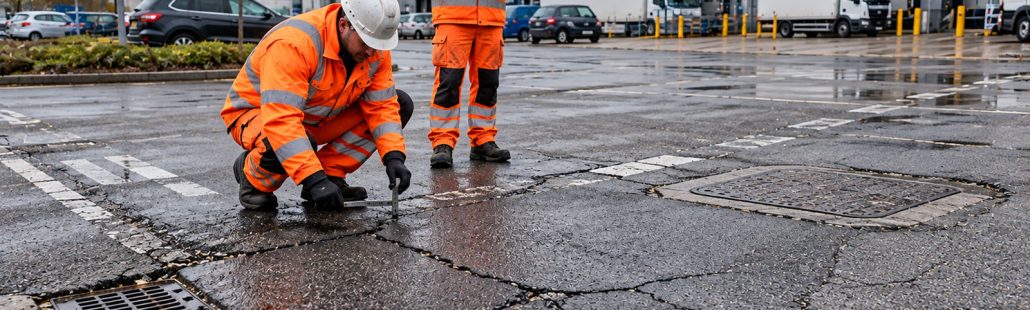
Tarmac requires inspections for cracking, edge deterioration and localised defects. Resin needs cleaning to prevent dirt, moss and organic material accumulating. Block paving requires attention to joints, weeds and occasional movement.
What changes is the type of maintenance required.
For a large commercial site, the straightforward repairability of tarmac can be particularly useful. On a premium domestic driveway, the relatively seamless nature of resin may appeal more strongly.
The best choice therefore depends on what the property owner considers acceptable maintenance over the long term.
Which Surface Deals Best with British Weather?
All three materials can perform effectively in the UK climate when properly installed.
The greater threat is often not rainfall itself but poor drainage and weak foundations. Water that becomes trapped beneath a surface can weaken supporting layers, while winter temperature changes can accelerate existing defects.
Tarmac benefits from a robust continuous surface. Permeable resin bound systems can provide useful water-management characteristics. Block paving can also be incorporated into permeable pavement designs when the correct blocks and underlying construction are used.
Whichever finish is selected, drainage needs to be considered as part of the entire installation rather than as an afterthought.
Which One Offers the Best Value?
Value should be considered over the lifespan of the surface rather than simply comparing initial quotations.
Tarmac frequently provides excellent value for larger areas because installation can be efficient and the finished pavement is robust. Resin generally commands a higher initial investment but provides a more decorative appearance that may justify the additional cost for prominent areas.
Block paving can also involve greater installation labour, but its design flexibility and ability to replace individual units can make it attractive for particular properties.
The right question is therefore not simply, “Which surface is cheapest?” It is, “Which surface provides the best value for how this area will actually be used?”
Could You Use More Than One Surface?
Interestingly, choosing a winner does not always mean choosing only one material.
Larger properties can benefit from combining surfaces according to the demands of different areas. A commercial site might use durable tarmac for its main access road while incorporating resin around a reception entrance or pedestrian area.
A residential property could similarly combine a tarmac access section with a decorative resin or block-paved entrance.
Using each material where its strengths are most valuable can produce a better result than attempting to make one surface perform every role.
So, Which Surface Actually Wins?
For strength, practicality and larger vehicle areas, tarmac is difficult to beat. It is proven, efficient and well suited to demanding road and commercial applications.
For visual appeal and a seamless premium finish, resin bound surfacing has a strong advantage. It is particularly attractive for driveways, pathways and prominent entrances where presentation is a priority.
For customisation and traditional design flexibility, block paving remains an excellent choice, particularly on residential and landscaped properties.
There is therefore no universal winner in the resin vs tarmac vs block paving UK debate. The winning surface is the one that matches the property’s traffic, drainage, appearance, maintenance expectations and budget.
A well-specified tarmac surface will outperform unsuitable resin in a heavily trafficked yard, just as an attractive resin finish may make considerably more sense than industrial-style asphalt at the entrance to a premium residential property.
Choosing according to use rather than appearance alone is what ultimately produces the best long-term result.