
- admin
- No Comments
- April 24, 2026
The Role of Sub-Base: Why It Matters More Than the Surface
When people assess the condition of a road, they usually focus on what they can see. Smooth tarmac, clean lines and a fresh finish create confidence. However, the true strength of any road lies beneath the surface. In reality, the road sub-base UK construction is often more important than the wearing course itself.
For commercial property owners and site managers, understanding the structural role of the sub-base is essential. A well-built surface laid on a weak foundation will inevitably fail, regardless of how good it looks initially.
What Is a Sub-Base?
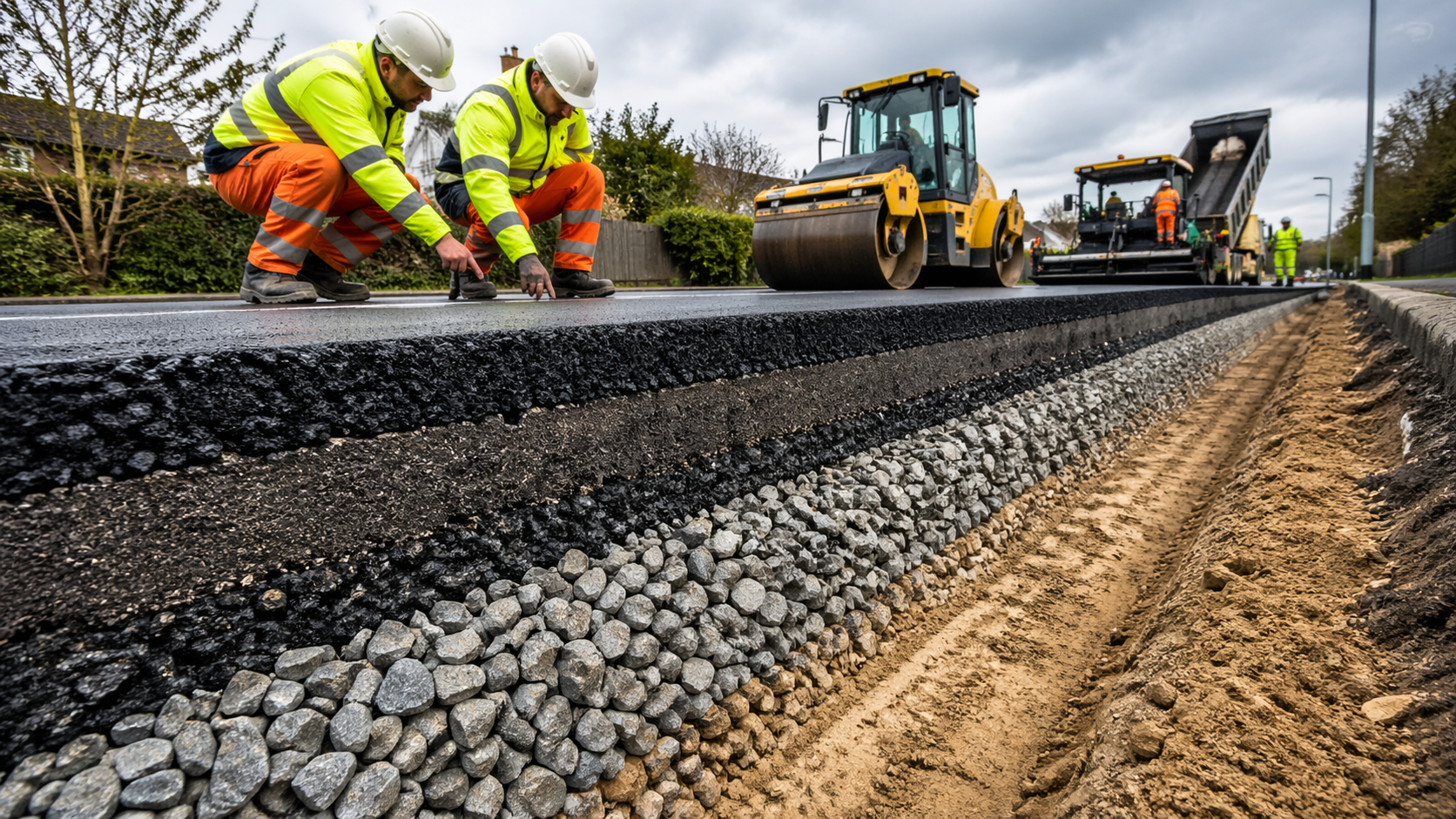
The sub-base is the structural layer positioned between the natural ground (subgrade) and the upper asphalt layers. Its primary function is to distribute loads evenly and provide a stable platform for the road above.
Typically constructed using compacted aggregate materials, the sub-base absorbs traffic stresses and prevents excessive movement. Without adequate depth and compaction, the upper layers are exposed to strain that leads to cracking, rutting and deformation.
Professional commercial surfacing projects prioritise correct sub-base preparation before any asphalt is laid.
Why the Sub-Base Matters More Than the Surface
The surface layer protects the road from traffic wear and environmental exposure, but it does not carry the structural load alone. Every vehicle passing over a road exerts downward pressure. That force must be distributed safely through the binder course and into the sub-base.
If the sub-base is too thin, poorly compacted or constructed with unsuitable materials, the road will flex under load. Over time, this movement causes surface cracks, potholes and settlement.
In contrast, a strong sub-base provides stability and significantly extends road lifespan. Even high-quality tarmac installation cannot compensate for a weak foundation.
Common Causes of Sub-Base Failure
Sub-base issues often originate during construction. Inadequate excavation depth, insufficient compaction and poor material selection are frequent contributors.
Water ingress is another major factor. If drainage is ineffective, moisture can weaken the sub-base, reducing its load-bearing capacity. Freeze-thaw cycles further accelerate deterioration by expanding and contracting trapped water within the structure.
Overloading can also lead to premature failure. Roads designed for light traffic but subjected to heavy goods vehicles are particularly vulnerable.
The Warning Signs of Sub-Base Problems
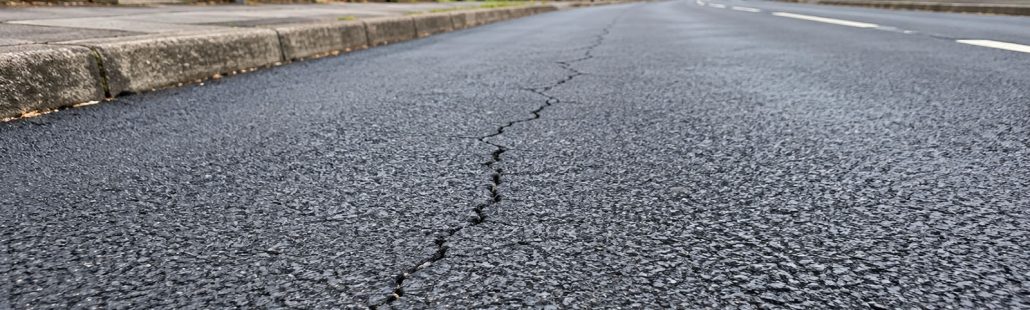
Surface defects often indicate deeper structural issues. Repeated cracking in the same location, wheel-path rutting and sinking areas are common indicators of sub-base instability.
Frequent need for minor repairs may suggest that the visible surface is not the root cause of the problem. While prompt pothole repairs restore short-term safety, recurring issues usually require investigation of the foundation layer.
Identifying structural weaknesses early prevents more extensive reconstruction later.
Thickness and Material Selection
The correct sub-base thickness depends on expected traffic loads and ground conditions. Heavily trafficked commercial sites require deeper and more robust construction than residential driveways or pedestrian areas.
Material quality is equally important. Well-graded aggregates compact more effectively and provide improved stability. Sub-base materials must also allow adequate drainage to prevent water retention.
Investing in appropriate depth and specification during initial construction significantly reduces long-term maintenance costs.
The Financial Impact of Getting It Wrong
Attempting to reduce costs by minimising sub-base depth can lead to expensive consequences. Surface resurfacing may temporarily improve appearance, but if the foundation remains weak, defects will return.
Full reconstruction is far more costly than installing a proper sub-base at the outset. For commercial sites dependent on reliable access, unexpected structural failure can also cause operational disruption.
A strong sub-base is therefore not an optional upgrade but a core investment in infrastructure longevity.
Building for Long-Term Performance
Road sub-base UK construction standards exist to ensure structural reliability. Professional contractors assess ground conditions, expected traffic loads and drainage requirements before determining appropriate depth and materials.
By focusing on foundation strength rather than surface appearance alone, property owners protect their investment and ensure consistent performance for years to come.
Conclusion
The visible surface of a road may attract attention, but the sub-base determines its true durability. A well-constructed foundation distributes load, resists movement and protects against moisture-related damage.
For commercial and industrial environments, prioritising sub-base quality is essential. When the foundation is built correctly, the surface performs as intended. When it is not, even the best asphalt will fail prematurely.
Understanding the role of the sub-base helps property owners make informed decisions that support long-term reliability and cost efficiency