
- Minisgreat
- No Comments
- August 13, 2026
The Best Surface for Roads That Keep Flooding
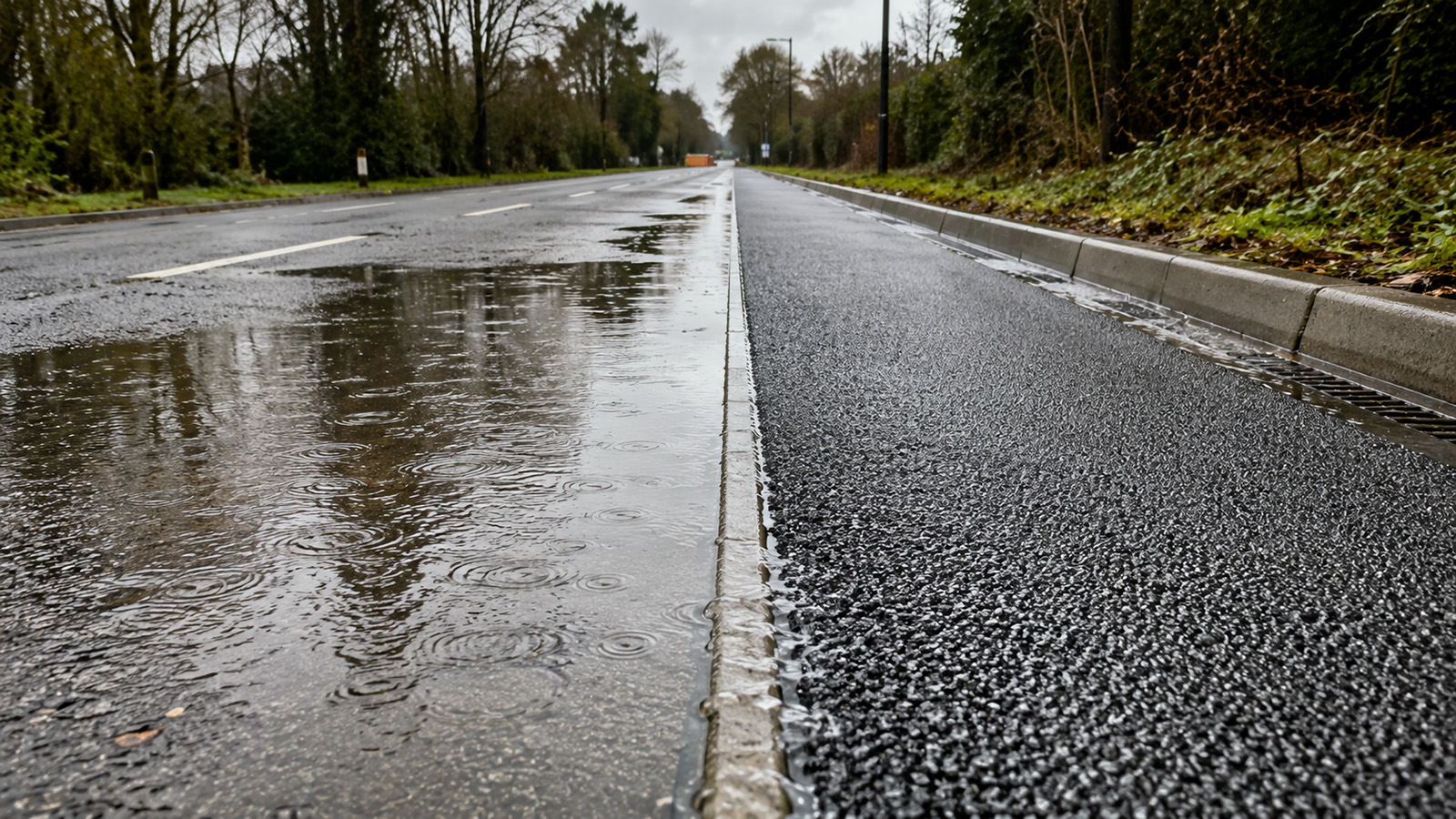
A road that floods once after an exceptional storm may simply have experienced more rainfall than its drainage system could handle. A road that floods repeatedly is a different matter.
Persistent standing water usually indicates a wider problem involving drainage capacity, surface levels, surrounding ground conditions or the construction beneath the road. Simply replacing damaged tarmac without investigating why water continues to collect can result in the same problems returning.
For UK property owners and commercial site managers, choosing the best road surface for flooding therefore requires looking beyond the visible wearing course. The right material matters, but drainage and pavement construction matter even more.
Why Repeated Flooding Damages Roads So Quickly
Roads are designed to cope with rain, but they are not designed to remain submerged for prolonged periods.
When water remains on a surface, it searches for weaknesses. Small cracks, joints, damaged edges and utility reinstatements can provide routes into the pavement structure.
Once moisture reaches the layers underneath, the supporting material may gradually lose strength. Traffic then passes over a surface that no longer has the same structural support beneath it.
This combination of water and vehicle loading can turn relatively minor defects into cracking, settlement and potholes.
Is Tarmac Suitable for Flood-Prone Roads?
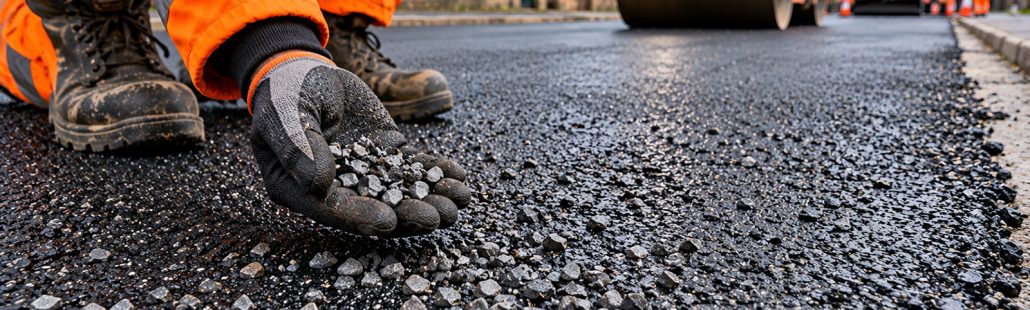
Tarmac and asphalt remain highly effective materials for UK roads, including areas exposed to regular rainfall.
A properly constructed asphalt surface provides a durable, relatively impermeable wearing course that directs water towards drainage systems rather than allowing it to soak freely into the pavement.
The important phrase, however, is “properly constructed”.
Professional tarmac installation should incorporate appropriate surface falls, strong foundations and an effective drainage strategy. If those elements are missing, even excellent asphalt cannot prevent water from collecting.
For roads carrying regular vehicles or heavier commercial traffic, tarmac will often remain the most practical solution provided the underlying cause of flooding is addressed.
Why Simply Resurfacing a Flooded Road Can Fail
Imagine an access road where a large puddle forms in exactly the same location every time it rains.
Resurfacing that area may provide a smooth new finish, but if the road levels continue directing water towards the same low point, the underlying drainage problem remains.
The new surface may eventually experience exactly the same deterioration.
Before resurfacing a repeatedly flooded road, contractors should establish where the water comes from, where it is supposed to go and why it is not reaching the drainage system.
Correcting those issues before laying the final surface can dramatically improve the lifespan of the road.
Could Permeable Surfacing Be the Answer?
For certain applications, permeable surfaces can form part of an effective water-management strategy.
Rather than directing all rainfall across the surface towards drains, permeable construction allows water to pass vertically through the pavement and into appropriately designed layers beneath.
This can reduce surface runoff and help manage rainfall closer to where it lands.
Professional resin bound surfacing can provide a permeable finish when installed as part of a suitable permeable pavement system.
However, resin bound surfacing is not automatically the answer for every road that floods.
Why Resin Bound Isn’t Suitable Everywhere
Resin bound surfaces are particularly useful for driveways, pathways, landscaped areas and selected light-traffic applications where permeability and appearance are priorities.
A heavily trafficked industrial access road presents very different demands.
Frequent HGV movements, braking, turning and high axle loads require a pavement designed specifically for those stresses. In such environments, a robust asphalt construction with properly engineered drainage may offer better long-term performance.
The right solution depends on both the water problem and the traffic using the road.
Drainage Often Matters More Than the Wearing Surface
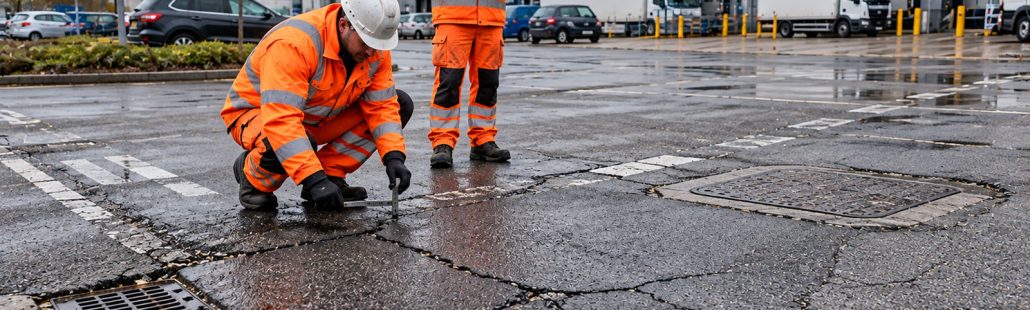
When flooding repeatedly affects a road, drainage should be one of the first areas investigated.
The road should have sufficient falls to direct water away from traffic areas and towards appropriate collection points. Gullies, channels and drainage outlets must also have enough capacity and remain free from obstructions.
A perfectly installed surface cannot compensate for a blocked drain.
Leaves, silt and debris can gradually reduce drainage capacity until water begins backing up onto the road. Regular cleaning and inspection can sometimes resolve persistent standing-water problems without requiring major resurfacing.
In other cases, the existing drainage infrastructure may need upgrading.
The Sub-Base Must Be Protected
What happens underneath a road is just as important as what happens on top.
The sub-base distributes vehicle loads and provides structural support for the asphalt layers above. If persistent flooding allows this material to become weakened, the road may begin to move under traffic.
Depressions can then develop, creating additional places for water to collect.
This creates a damaging cycle. Water weakens the structure, structural movement creates low areas, and those low areas retain even more water.
Breaking that cycle may require localised excavation and reconstruction rather than another surface treatment.
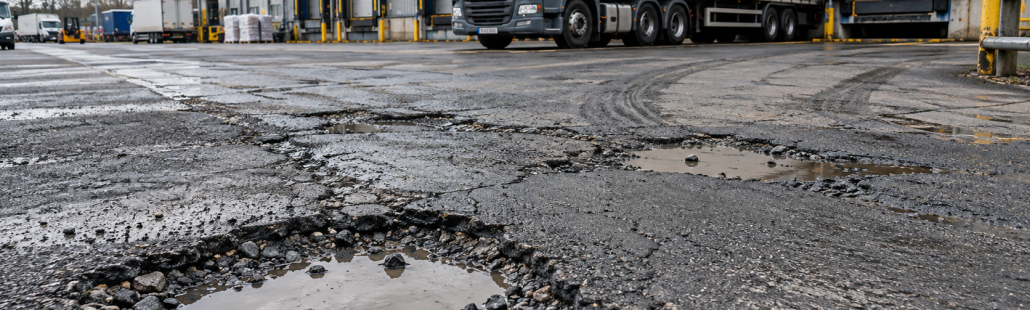
Flooding and Potholes Are Closely Connected
Repeated standing water is particularly dangerous when cracks already exist.
Moisture enters the pavement through these defects and gradually undermines the surrounding material. Vehicle tyres then place repeated pressure on the weakened section until pieces of asphalt begin breaking away.
A pothole develops, creating an even larger opening for water.
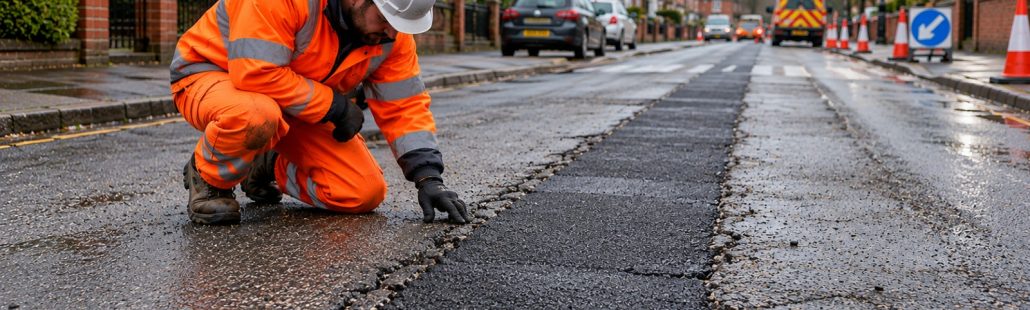
Prompt pothole repairs can stop localised defects from expanding, but recurring potholes in flood-prone locations should trigger a wider investigation into drainage and structural condition.
Repeatedly filling the same hole without resolving the cause is unlikely to provide good long-term value.
Surface Levels Need Careful Attention
Even relatively small errors in road levels can create significant drainage problems.
A slight depression may be barely noticeable in dry weather but become obvious after heavy rainfall. Water naturally collects at the lowest point and may remain there long after the surrounding road has dried.
Over time, heavy vehicles can also cause rutting that changes the original surface profile.
Correcting these levels during resurfacing allows water to move efficiently towards drainage points instead of remaining within wheel paths.
Machine-laid asphalt can be particularly useful on larger areas where consistent levels and crossfalls are required. Professional machine lay tarmac can create a controlled, uniform finish across substantial commercial surfaces.
Commercial Sites Have Additional Challenges
Industrial estates, warehouses, retail parks and distribution facilities often contain large areas of hard surfacing.
During intense rainfall, enormous volumes of water can accumulate across roofs, roads, yards and car parks in a short period. If the site’s drainage infrastructure cannot manage that volume, localised flooding can occur even when the road itself has been correctly constructed.
Commercial sites also experience heavier traffic, meaning water-related structural weakness can deteriorate particularly quickly.
A comprehensive commercial surfacing approach should therefore consider traffic loading, drainage, surface levels and pavement construction together rather than treating them as separate issues.
What About Concrete or Block Paving?
Alternative surfaces can be appropriate in particular environments, but changing material alone does not solve a drainage problem.
Concrete can provide considerable structural strength, yet water will still collect on it if levels and drainage are inadequate.
Permeable block paving can support water management when the entire pavement has been designed for infiltration or attenuation. Conventional block paving, however, should not automatically be assumed to be permeable.
The complete system beneath the visible surface determines how water is managed.
The Best Solution Depends on Where the Water Needs to Go
There is no single road surface capable of making flooding disappear.
For a busy commercial access road, durable asphalt combined with correctly designed falls, drainage channels and a strong foundation may be the best option.
For a driveway or lighter-traffic area, a permeable resin bound system may help manage surface water while providing an attractive finish.
For other sites, drainage infrastructure may need upgrading before any new surface is installed.
The correct decision begins with understanding the cause of the flooding rather than selecting a material first.
Don’t Wait Until the Surface Starts Breaking Apart
Standing water is an early warning sign that should not be ignored simply because the road remains usable.
If puddles repeatedly form after ordinary rainfall, property owners should monitor how long they remain and whether nearby cracks, settlement or surface deterioration are developing.
Addressing drainage problems at this stage can be considerably less disruptive than waiting until the pavement structure has been damaged.
Once widespread movement occurs beneath the surface, resurfacing may no longer be sufficient and deeper reconstruction can become necessary.
So, What Is the Best Surface for a Road That Keeps Flooding?
For most trafficked roads, properly designed and installed asphalt remains one of the strongest and most practical options. Its success, however, depends on giving rainwater somewhere to go.
Where permeability is appropriate and traffic demands are lower, resin bound and other permeable pavement systems can provide valuable alternatives.
The crucial point is that the best road surface for flooding UK properties is not determined by the surface material alone. The drainage system, road levels, sub-base, expected traffic and surrounding site all need to work together.
If a road keeps flooding, replacing the blacktop without solving the water problem simply resets the clock. Correct the drainage and structural weaknesses first, then select a surface suited to the site’s actual demands. That approach gives the finished road the best chance of surviving Britain’s wet weather for years to come.