
- Minisgreat
- No Comments
- August 15, 2026
What Causes Ripples and Waves in Tarmac?
A newly laid tarmac road should normally have a consistent profile that allows vehicles to travel smoothly and rainwater to drain effectively. Over time, however, some property owners begin to notice waves, ridges or rippled sections developing across the surface.
These defects are more than an appearance problem.
A visibly wavy road can indicate that the asphalt has moved under traffic or that the pavement beneath it is no longer providing adequate support. If the cause is not identified, the deformation can worsen and eventually contribute to cracking, standing water and more extensive structural failure.
Understanding what causes ripples in tarmac UK roads is particularly important for commercial sites where heavy vehicles repeatedly brake, turn and accelerate over the same areas.
What Are Ripples in Tarmac?
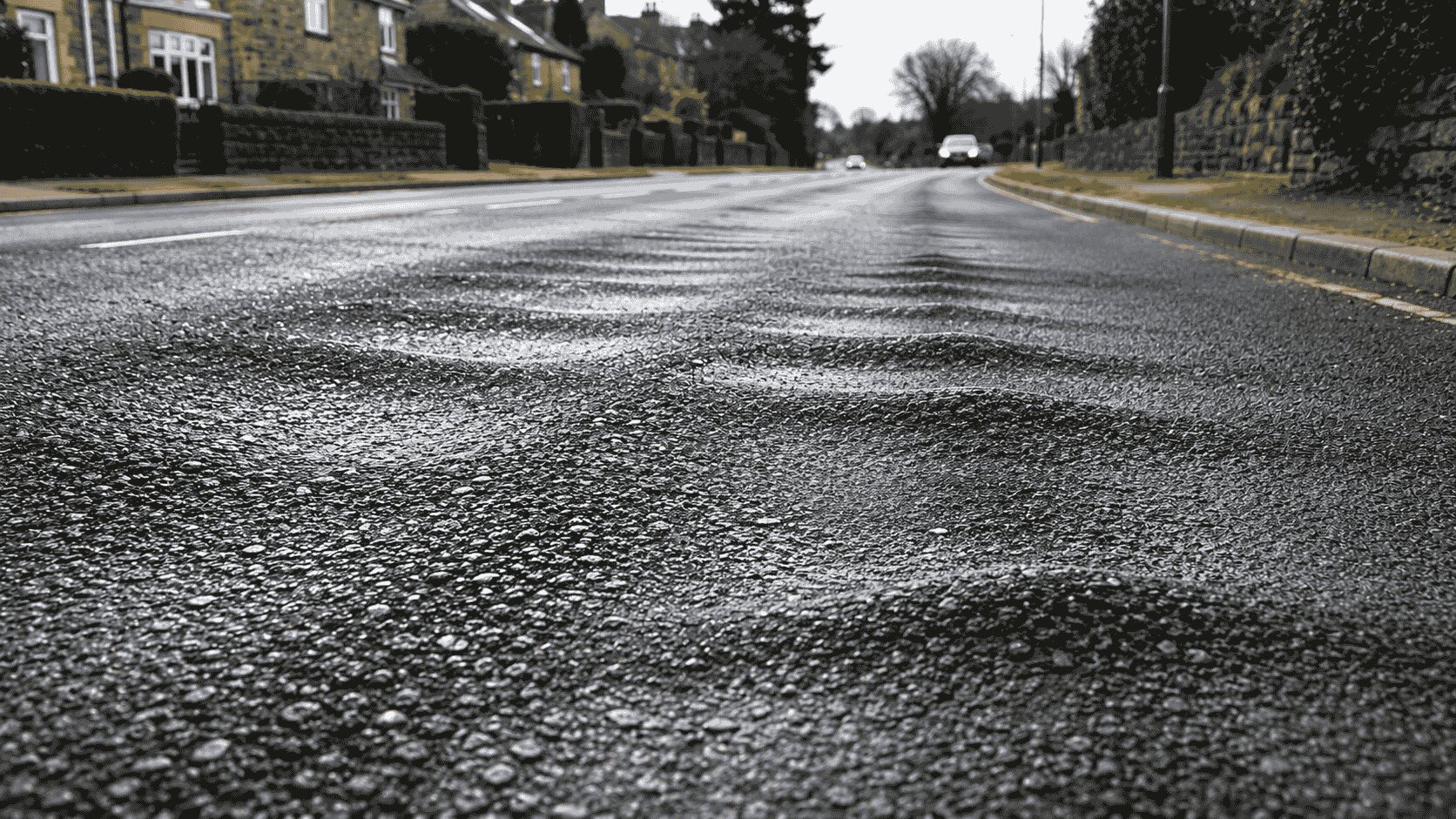
Rippling describes a form of surface deformation where the asphalt develops a series of raised and depressed areas rather than maintaining its intended profile.
Depending on the cause and location, the defect may also be described as shoving, corrugation or surface deformation.
The pattern provides useful information. Ripples appearing around a junction or stopping point may be associated with braking forces, while broader undulations extending across a road could suggest problems deeper within the pavement construction.
This is why diagnosing the cause is more important than simply flattening the visible defect.
Heavy Braking Can Push Asphalt Out of Position
One of the most common locations for surface deformation is where vehicles regularly slow down.
When a heavy vehicle brakes, its tyres do more than press vertically onto the road. They also transfer horizontal forces into the asphalt. Repeating that movement hundreds or thousands of times can gradually push an unsuitable or weakened surface forwards.
The result can be a raised wave immediately ahead of an area where vehicles regularly stop.
Commercial entrances, security barriers, junctions, pedestrian crossings and loading areas can therefore be particularly susceptible.
Correctly specified commercial surfacing should take these repeated vehicle movements into account rather than considering traffic volume alone.
Acceleration Creates Similar Stress
The same principle applies when vehicles accelerate.
Tyres need traction to move a vehicle forwards, and that transfers force through the road surface. Where heavy vehicles repeatedly accelerate from the same position, the upper asphalt layers can experience considerable shear stress.
A warehouse exit or industrial junction may therefore develop deformation even if the road further along remains in good condition.
This helps explain why a road can look perfectly acceptable across most of a site while one relatively small section becomes visibly rippled.
Turning Vehicles Can Distort the Surface
Turning movements can be even more demanding.
When an HGV, refuse vehicle or delivery lorry manoeuvres at low speed, its tyres can scrub across the surface rather than rolling cleanly forwards. This produces sideways forces within the asphalt.
Repeated tight turns can gradually move the surface material, particularly during warmer conditions when bituminous materials are more flexible.
Loading yards, turning heads and confined commercial entrances should therefore be designed for more than straightforward vehicle loading.
The Asphalt Mix May Be Unsuitable for the Traffic
Not every asphalt specification is appropriate for every application.
A surface designed for ordinary cars may perform perfectly well on a residential driveway but struggle if it is regularly exposed to heavy commercial vehicles and concentrated braking forces.
Material selection needs to consider axle loading, traffic frequency and how vehicles will actually move around the site.
Professional tarmac installation should therefore begin with an understanding of the intended use of the finished pavement.
Choosing the correct construction from the outset can significantly reduce the risk of premature deformation.
Weak Foundations Can Create Broader Waves
Sometimes the problem is not primarily within the asphalt.
The visible surface relies on the sub-base and underlying ground for support. If those layers were inadequately compacted, constructed from unsuitable material or subsequently weakened, the road can begin to settle unevenly.
Instead of small ripples associated with braking, the surface may develop broader waves and depressions.
Installing another layer of asphalt over an unstable foundation may hide the problem temporarily, but the movement can eventually transfer through the new surface.
Where deeper structural movement is suspected, the affected pavement may need to be excavated and reconstructed rather than simply resurfaced.
Poor Compaction Can Lead to Movement
Compaction is a critical stage of asphalt installation.
Fresh material needs to be compacted to the appropriate density while it remains within a suitable working temperature range. If compaction is inadequate, excessive voids may remain within the material and the pavement can continue consolidating under traffic.
This can produce uneven levels and localised deformation.
On larger roads and car parks, professional machine lay tarmac can help achieve consistent material placement before appropriate rolling and compaction are completed.
The machinery itself does not guarantee quality, however. Material temperature, layer thickness, rolling technique and site preparation all remain important.
Hot Weather Can Make Existing Weaknesses More Obvious
UK summers may not be consistently hot, but dark asphalt can become considerably warmer than the surrounding air when exposed to strong sunlight.
Bituminous materials naturally become more flexible as temperatures increase. A correctly designed pavement should accommodate normal seasonal conditions, but heat can make an already vulnerable surface more susceptible to movement under concentrated loads.
Heavy braking or turning during warmer periods can therefore expose weaknesses that were less noticeable during colder weather.
Heat alone is not necessarily the underlying cause. It can simply accelerate deformation where the material, construction or traffic conditions are already problematic.
Too Much Bitumen Can Contribute to Instability
The balance of materials within asphalt is important.
Bitumen binds the aggregate together and gives asphalt its characteristic flexibility, but the mixture needs to be correctly designed. An inappropriate mix can lack the stability required for demanding traffic conditions.
If the surface is too susceptible to movement, heavy loads and horizontal tyre forces may gradually deform it.
For this reason, asphalt should be selected according to its intended application rather than treating all black road surfaces as essentially the same product.
Water Can Turn a Small Deformation Into a Bigger Problem
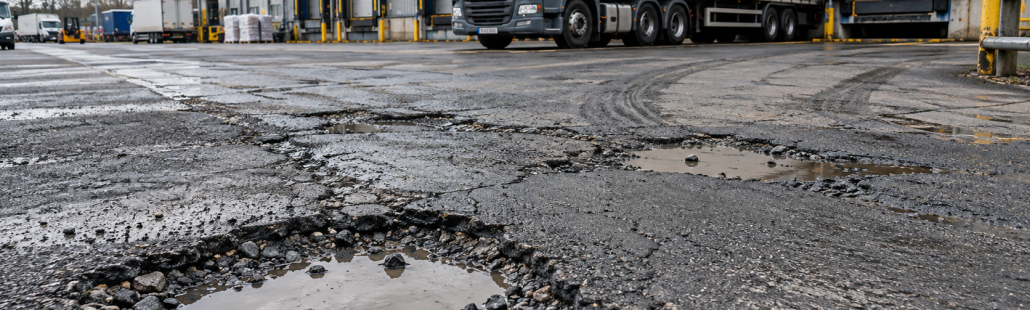
Once ripples create depressions in the road, another problem can appear: standing water.
A road originally constructed with appropriate falls may no longer drain correctly after deformation. Rainwater starts collecting in the newly formed low points.
If cracking develops within those areas, water can penetrate into the pavement and weaken the supporting layers.
The deformation then worsens, creating deeper depressions that hold even more water.
This feedback cycle is one reason visibly distorted surfaces should be investigated before widespread damage develops.
Why Simply Patching the Low Spots May Not Work
Filling a depression can make a road appear level again, but it does not necessarily address why the surface moved.
If heavy braking is pushing an unsuitable asphalt mix, the repaired section may deform again. If the foundation is settling, adding more surface material will not stabilise the layers underneath.
Similarly, repeated pothole repairs around a wavy section may indicate that the wider pavement structure needs assessment.
A lasting repair begins by identifying whether the defect originates in the wearing course, lower asphalt layers, sub-base or underlying ground.
High-Risk Areas Should Be Inspected Regularly
Commercial property managers do not need to wait until obvious waves appear before checking vulnerable areas.
Entrances, loading bays, junctions, ramps, turning areas and locations immediately before barriers or gates deserve particular attention. These are the places where vehicle forces are concentrated repeatedly.
Early signs may include slight ridges, shallow depressions, unusual tyre marks, localised cracking or water beginning to collect where it previously drained away.
Identifying these changes early can make remedial work considerably simpler.
Can Rippling Be Prevented?
Preventing deformation starts with designing the pavement around its actual use.
The foundation must provide sufficient support, asphalt layers need to be appropriate for anticipated loads, drainage must protect the structure from water and the finished material needs correct compaction.
Traffic behaviour should also be considered. A road used by fifty HGVs that travel straight through the site presents different demands from one used by fifty HGVs that stop, turn sharply and accelerate in the same small area.
Accounting for these concentrated forces during design can substantially improve surface life.
When Does a Wavy Road Need Repair?
A slight cosmetic variation does not automatically mean a road requires reconstruction. The severity, progression and cause of the deformation all matter.
If the waves are becoming more pronounced, affecting vehicle movement, creating standing water or developing cracks, professional assessment is advisable.
The appropriate repair might involve replacing only the affected asphalt layers. Where movement originates deeper within the pavement, however, the weakened section may need excavation and reconstruction from the foundation upwards.
Addressing the actual cause is generally more economical than repeatedly treating the visible symptoms.
A Wavy Surface Is Often Telling You Something
Ripples and waves should not simply be accepted as an unavoidable consequence of tarmac ageing.
They are often evidence that forces acting on the pavement exceed what part of the construction can comfortably resist. Heavy braking, acceleration, turning movements, unsuitable materials, poor compaction and weak foundations can all contribute.
For property owners dealing with ripples in tarmac UK roads, the location and shape of the deformation provide important clues about what is happening beneath the tyres.
Investigating those clues early can prevent a relatively localised defect from becoming a larger drainage or structural problem. With the correct pavement design, suitable materials and quality installation, even heavily trafficked commercial surfaces can remain stable, smooth and serviceable for many years.