
- Minisgreat
- No Comments
- September 3, 2026
Why Do Bus Stops and Junctions Wear Out Faster Than Straight Roads?
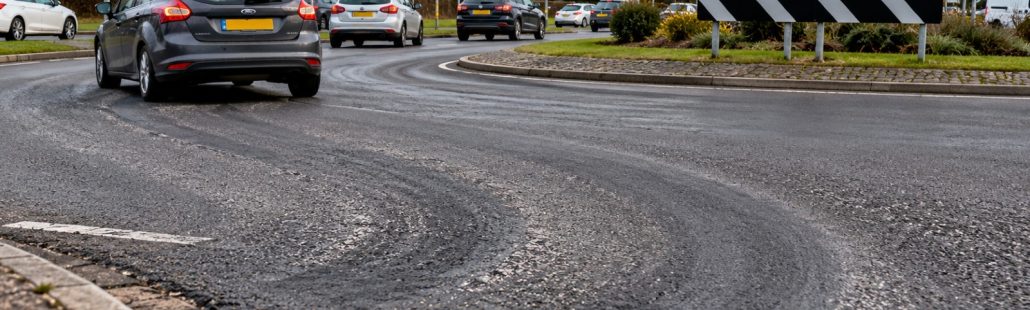
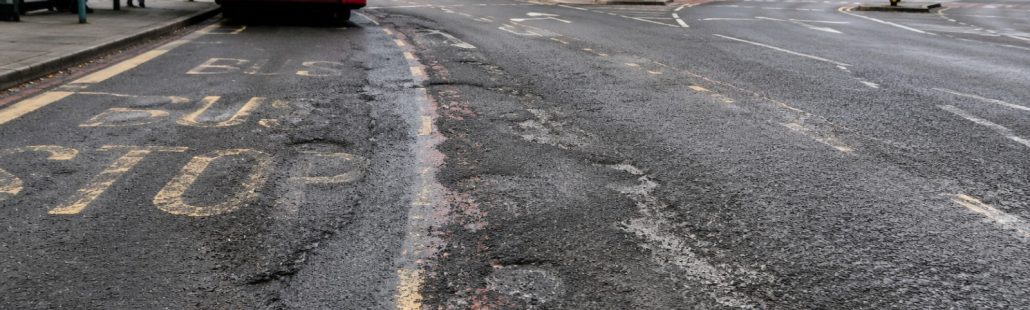
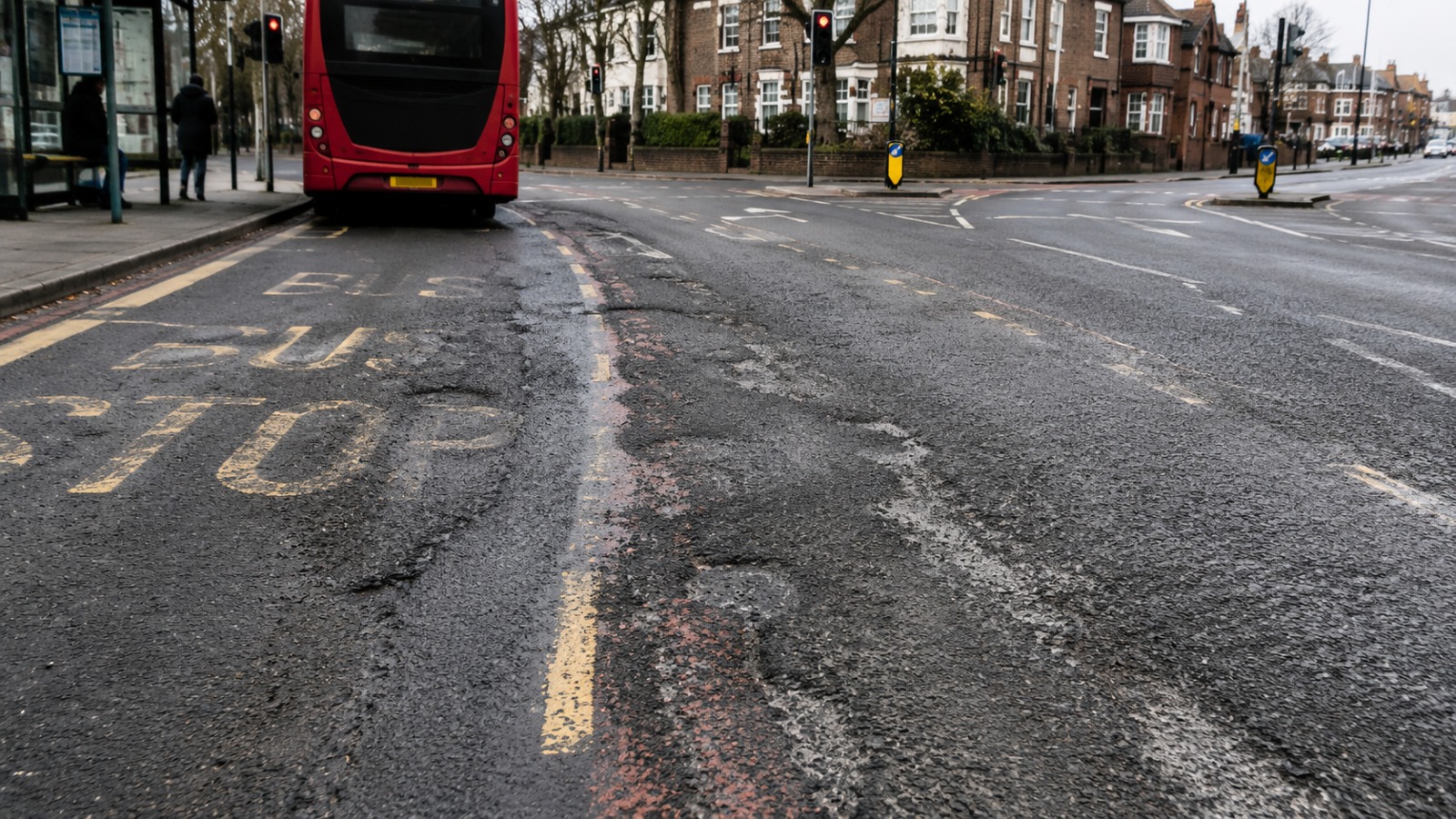
Drive along an otherwise reasonable stretch of road and you may notice something interesting. The straight sections can remain relatively smooth while the surface around a bus stop, junction or traffic-controlled intersection shows cracking, depressions, polished areas or distorted tarmac.
This is not simply coincidence.
Road surfaces behave differently depending on how vehicles use them. A vehicle travelling steadily along a straight road places a predominantly rolling load on the pavement. At a junction or bus stop, that same vehicle may brake heavily, remain stationary, turn sharply and accelerate away.
Those actions introduce additional forces into the road.
Bus stop and junction road damage UK property owners and site managers see is therefore often the result of concentrated loading combined with braking, turning and acceleration. When heavy commercial vehicles are involved, these effects become even more significant.
Understanding these forces helps explain why certain parts of a road may require maintenance long before the surrounding surface reaches the same condition.
Straight Roads Experience Relatively Consistent Loading
On a straight road where traffic flows at a steady speed, tyres generally roll across the surface without major changes in direction.
Vehicle weight still places substantial pressure on the pavement, particularly where HGVs and buses are present, but the loading pattern is comparatively predictable.
Each vehicle approaches, passes over the road and continues onwards.
At junctions and bus stops, the situation changes. Vehicles are no longer simply rolling over the pavement. Their tyres begin transferring horizontal forces into the surface as speed and direction change.
That distinction has a major effect on long-term wear.
Braking Places Additional Stress on the Surface
When a vehicle brakes, friction between its tyres and the road allows it to slow down.
That friction creates forces through the surface.
At a bus stop, buses repeatedly brake in approximately the same location throughout the day. At a junction, vehicles may brake whenever traffic signals change, when approaching a give-way line or when waiting for other traffic.
The problem is repetition.
A single braking event is unlikely to damage a properly constructed road. Thousands of braking events concentrated over the same relatively small section create a very different loading environment.
Over time, vulnerable asphalt can begin to deform or deteriorate.
Heavy Buses Magnify the Effect
Buses are considerably heavier than ordinary passenger cars, and their loads are carried through relatively small tyre contact areas.
When a bus approaches a stop, the road must accommodate both its weight and the forces generated as it decelerates.
Once stationary, the vehicle creates a sustained load in a predictable location. It then accelerates away, introducing another change in force.
This process may occur repeatedly throughout every operating day.
The road directly alongside a bus stop therefore experiences a highly concentrated pattern of loading that the neighbouring carriageway may not experience to the same extent.
Buses Often Follow Almost Identical Wheel Paths
Another important factor is positioning.
Bus drivers need to bring their vehicles close to the kerb so passengers can board and leave safely. As a result, buses tend to follow very similar wheel paths when approaching each stop.
This concentrates repeated loading into narrow sections of pavement.
If a weakness exists in the asphalt, sub-base or underlying construction, the repeated wheel loads can gradually expose it.
Depressions may begin forming where tyres regularly travel or where the bus remains stationary.
This can eventually produce visible rutting.
Stationary Loads Matter Too
Road wear is often associated with moving traffic, but stationary vehicles also place loads on the pavement.
At a busy bus stop, a heavy vehicle may remain in approximately the same position while passengers board. At traffic signals, queues of cars, vans, buses and HGVs can remain stationary over the same area repeatedly.
During warm conditions, asphalt materials can become more susceptible to deformation.
If the pavement specification is inadequate for the loads it receives, repeated stationary loading can contribute to localised depressions and surface distortion.
Junctions Add Turning Forces
Junctions create another challenge: vehicles change direction.
When a tyre turns, it does not interact with the road in exactly the same way as a tyre travelling straight ahead. Lateral forces are introduced as the vehicle changes its path.
These forces can be particularly significant for large vehicles.
A long HGV turning through a junction may place substantial sideways stresses on the pavement as its multiple axles follow different arcs.
Repeated turning can therefore place much greater demands on the surface than ordinary straight-line traffic.
Slow, Tight Turns Can Be Particularly Demanding
Tyre forces can become especially noticeable when vehicles make tight turns at relatively low speeds.
This occurs at junctions, industrial entrances, loading areas and access points.
The tyres can effectively scrub across the pavement as the steering angle changes. Heavy vehicles with multiple axles can intensify this effect because not every wheel follows exactly the same turning path.
Over time, these forces can contribute to displacement and deformation in asphalt that is not sufficiently suited to the location.
This is why surfacing specifications should reflect how traffic will actually move across a site rather than being based solely on the number of vehicles using it.
Acceleration Creates Another Concentrated Load
Once a traffic signal turns green or a bus is ready to leave its stop, vehicles accelerate.
Again, the tyres transfer force into the road.
Straight sections with free-flowing traffic do not experience the same repeated stop-start cycle.
A busy junction may therefore be subjected continuously to braking in one area and acceleration in another.
The result is a demanding environment in which the road surface must resist forces from several directions throughout the day.
Heavy Goods Vehicles Make Junctions Even More Demanding
Industrial estates and commercial access roads can experience particularly severe junction wear.
HGVs may approach slowly, brake, wait for traffic, make a tight turn and then accelerate while carrying substantial loads.
All these actions can occur across a relatively small area of pavement.
Professional commercial surfacing needs to take these operating conditions into account. A surface suitable for a lightly used car park may not be appropriate for a junction regularly crossed by fully loaded commercial vehicles.
Traffic type matters just as much as traffic volume.
Why Rutting Develops Around Bus Stops
Rutting appears as longitudinal depressions following regular wheel paths.
At bus stops, these depressions can become particularly noticeable because heavy vehicles repeatedly occupy very similar positions.
Rutting may involve deformation within the asphalt layers, movement deeper within the pavement construction or a combination of both.
Once ruts form, they can begin collecting rainwater.
That introduces an additional maintenance concern because standing water increases spray, affects surface usability and can enter existing cracks or defects.
A problem initially caused by loading can therefore become more complicated once drainage is affected.
Why Junctions Can Develop Ripples and Distortion
Not every pavement failure appears as a crack or pothole.
Some heavily stressed areas develop ripples, waves or pushed sections of asphalt.
This type of distortion can occur when horizontal vehicle forces cause material to deform rather than simply fracture.
Locations where vehicles repeatedly brake or turn are particularly susceptible if the asphalt mixture or pavement construction cannot adequately resist those forces.
The surface may appear to have been pushed forwards or sideways.
Installing the appropriate materials and achieving effective compaction are therefore particularly important in high-stress locations.
Professional machine lay tarmac can help achieve controlled placement and consistent compaction across larger road and commercial surfacing projects.
Cracking Can Develop Around Deformed Areas
Once a pavement begins deforming, additional stresses can develop.
The road is no longer supporting traffic across the profile originally intended by its design. Vehicles continue passing over the affected area, placing repeated loads on sections that may already have weakened.
Cracks can then form around the edges of depressions or distorted asphalt.
Water entering these cracks can contribute to further deterioration.
If the underlying cause remains active, small cracks may eventually develop into broken areas requiring more extensive repair.
Potholes Are Often the Later Stage of the Problem
Potholes rarely appear instantly in an otherwise perfect road.
They often develop after a sequence of deterioration.
Repeated traffic loading contributes to cracking or deformation. Water reaches vulnerable parts of the pavement. Material weakens and begins breaking away. Vehicle tyres then remove additional loose material.
Eventually, a visible hole develops.
Professional pothole repairs should therefore consider the condition around the defect rather than treating every pothole as an isolated missing piece of surface.
At bus stops and junctions, the intense traffic forces that contributed to the original deterioration will continue after the repair.
Drainage Problems Can Accelerate Failure
Bus stops and junctions also need effective water management.
Rutting, settlement and surface deformation can alter the original road levels, creating low points where water collects.
Blocked gullies can make the situation worse.
Once water repeatedly sits on a damaged surface, it has more opportunity to enter cracks and vulnerable joints. During colder UK weather, repeated wetting and temperature changes can further stress already deteriorating areas.
Correct drainage cannot eliminate traffic loading, but it can help prevent water from accelerating the damage.
Why Simply Adding More Tarmac May Not Work
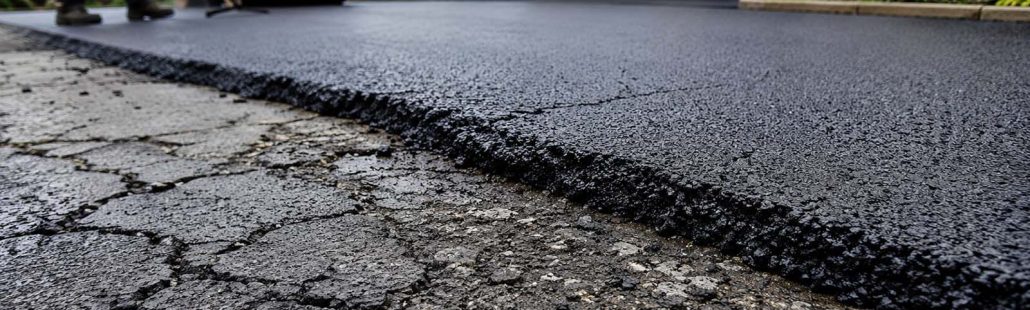
When a worn bus stop or junction becomes uneven, covering it with a fresh surface layer may seem like a straightforward repair.
Whether that works depends on what is happening underneath.
If the existing pavement is structurally sound and deterioration is confined to the upper surface, an appropriately prepared resurfacing treatment may be suitable.
If the pavement has deep rutting, foundation movement or widespread structural failure, laying fresh asphalt over the top can leave the underlying weakness untouched.
The new surface may then begin deforming in the same wheel paths.
Proper tarmac installation depends on preparation and structural support as much as the appearance of the finished wearing course.
Bus Stops May Need a Different Approach From the Surrounding Road
Because bus stops experience such concentrated loading, their pavement requirements may differ from those of the road immediately before and after them.
The construction needs to account for vehicle weight, repeated braking, stationary loading and acceleration.
The same principle applies to junctions receiving substantial commercial traffic.
Treating every metre of a road as though it experiences identical forces can lead to vulnerable locations wearing prematurely.
Good pavement design responds to the actual demands placed on each part of the site.
Commercial Site Entrances Experience Similar Problems
The issue is not limited to public highways.
Warehouse entrances, distribution centres, retail parks, industrial estates and business premises often contain areas that behave much like road junctions.
Delivery vehicles slow down at security gates, stop at barriers, make tight turns and accelerate towards loading areas.
The pavement immediately around these locations can therefore deteriorate much faster than straight internal access roads.
Site managers who notice repeated damage in exactly the same places should consider vehicle behaviour as part of the investigation.
Repeatedly repairing the visible defect without considering the loading pattern can lead to the same failure returning.
Surface Specification Matters
Not all asphalt mixtures and pavement constructions are intended for identical conditions.
A road carrying light, steady traffic has different requirements from a heavily used turning area.
Material selection, layer thickness, foundation construction, compaction and drainage all contribute to performance.
The correct specification should therefore consider the heaviest vehicles expected to use the area and what those vehicles will actually be doing.
A relatively modest number of heavy vehicles braking and turning repeatedly can create more concentrated pavement stress than a larger number of cars travelling smoothly in a straight line.
Early Warning Signs Shouldn’t Be Ignored
Surface deterioration often provides warning before major failure occurs.
Shallow wheel depressions, small cracks around regular stopping positions, areas of polished aggregate, slight rippling and recurring puddles can all indicate that a high-stress area is beginning to change.
Monitoring these locations can help site managers intervene before deterioration progresses into widespread cracking or potholes.
This is particularly valuable on commercial premises where damaged access roads can affect vehicles, pedestrians, drainage and day-to-day operations.
Maintenance Should Reflect How the Road Is Used
A maintenance programme based purely on the age of a road can miss important local differences.
Two sections constructed at the same time may deteriorate at very different rates because one carries steady traffic while the other experiences continuous braking and turning.
Bus stops, junctions, loading areas, security gates and tight bends therefore deserve closer inspection than lightly stressed straight sections.
Targeted maintenance can address vulnerable areas before the entire pavement requires major work.
The Road Is Responding to Vehicle Behaviour
Bus stops and junctions wear faster because vehicles ask much more of the pavement in these locations.
Instead of simply rolling across the road, tyres brake, stop, turn, scrub and accelerate. Heavy buses and commercial vehicles magnify those forces, while repeated use concentrates them into almost identical areas every day.
Once deformation begins, standing water and cracking can accelerate the deterioration further.
For anyone dealing with bus stop and junction road damage UK sites, this explains why repairing the visible surface alone is not always enough. The pavement specification, foundation, drainage and actual traffic movements all need to be considered.
Straight roads generally experience predictable rolling loads. Bus stops and junctions experience a repeated combination of forces.
That difference is why two sections of road only metres apart can have completely different maintenance needs.