

- Minisgreat
- No Comments
- September 13, 2026
Why Busy Roads Develop Dark, Shiny Patches
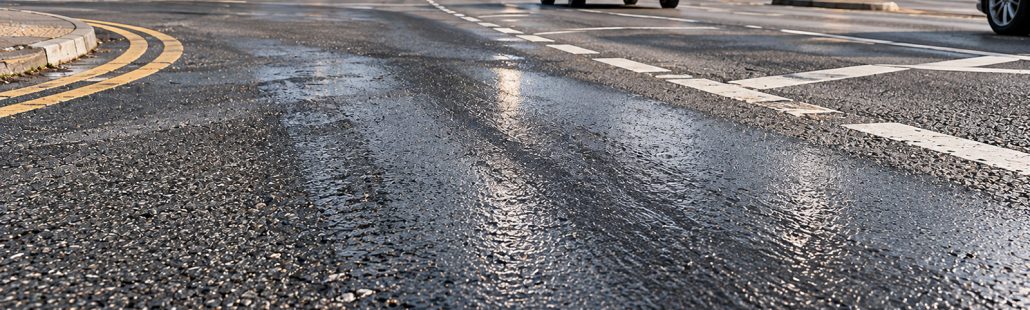
Drive along a heavily used road in the UK and you may notice that certain sections look darker and shinier than the asphalt around them.
The effect is often particularly obvious at junctions, roundabouts, bus stops and busy commercial entrances. In some cases, two shiny strips appear exactly where vehicle tyres normally travel.
At first glance, these areas can look wet even when the rest of the road is completely dry.
There are several possible explanations, but one of the most common is gradual polishing of the road surface under repeated traffic. Tyres continually pass over the same aggregate particles, slowly changing their exposed texture and appearance.
A shiny road surface UK drivers notice is therefore not necessarily caused by oil or a recent repair. It can be a visible sign of how intensely a particular section of road is being used.
Road Surfaces Aren’t Completely Smooth
Although asphalt may look relatively smooth from inside a vehicle, its surface contains considerable texture.
The aggregate within the asphalt creates small-scale irregularities that contribute to the interaction between tyres and the road.
This texture is important.
Road surfacing is not designed simply to produce the smoothest possible black finish. It needs to provide suitable characteristics for the traffic and environment in which it will be used.
Professional tarmac installation therefore involves selecting and installing appropriate materials rather than judging the completed pavement solely by how dark or smooth it appears.
Traffic Gradually Changes the Exposed Aggregate
Every passing tyre interacts with the road surface.
One vehicle movement has an extremely small effect. Multiply that by thousands or millions of vehicle movements, however, and gradual changes become more significant.
The exposed aggregate can become polished over time.
As the microscopic roughness of the surface changes, light reflects differently from it. The affected wheel paths can consequently appear smoother, darker or shinier than less heavily trafficked sections nearby.
This is one reason the effect is often concentrated rather than spread evenly across the entire carriageway.
Wheel Paths Reveal Where the Traffic Really Travels
Drivers naturally follow similar positions within a traffic lane.
This means tyres repeatedly pass across relatively narrow strips of road rather than distributing wear perfectly across the entire width.
Over time, these regular wheel paths can become visually different.
A heavily used lane may therefore develop two darker strips with a noticeably less polished area between them.
The pattern effectively provides a visual record of where tyre loading is concentrated.
Commercial sites can show the same effect around entrances and access roads where delivery vehicles repeatedly follow identical routes.
Heavy Vehicles Can Accelerate Surface Wear
Not all traffic places the same demands on a road.
HGVs, buses and heavily loaded commercial vehicles apply much greater loads than ordinary passenger cars. Their tyre configurations and operating patterns can also concentrate stresses within particular areas.
Roads serving warehouses, industrial estates and distribution facilities therefore require construction appropriate for these demands.
Professional commercial surfacing should consider the type of traffic expected on a site rather than simply the number of vehicles using it.
A road used by relatively few heavy lorries can experience very different wear from one used primarily by cars.
Why Junctions Often Look Shinier
Junctions are particularly demanding locations for road surfaces because vehicles do more than simply travel forwards.
They brake while approaching, sometimes remain stationary and then accelerate or turn.
These actions increase the interaction between tyres and the road.
Repeated braking can concentrate wear before the junction, while turning movements introduce lateral forces that are less pronounced on straight sections.
The result can be visibly polished areas around approaches, turning lanes and stopping positions.
This explains why a road may look relatively uniform for hundreds of metres before suddenly developing darker, smoother-looking sections near a junction.
Roundabouts Experience Continuous Turning Forces
Roundabouts create another challenging environment.
Vehicles brake on approach and then remain under steering input as they travel around the circular carriageway.
Heavy vehicles can create particularly significant tyre scrub because their multiple axles cannot all follow exactly the same turning radius.
These repeated lateral forces contribute to surface wear.
Certain wheel paths around a busy roundabout may consequently become polished faster than neighbouring sections of pavement.
The pattern can be especially noticeable where HGV traffic is frequent.
Bus Stops Can Develop Very Obvious Shiny Areas
Bus stops combine several demanding traffic conditions in one relatively small location.
A bus approaches under braking, travels close to the kerb, stops in approximately the same position and then accelerates away.
This cycle can happen hundreds of times across a busy route.
Because buses are heavy and tend to follow consistent wheel paths, the road surface experiences highly concentrated loading and tyre interaction.
Dark or polished areas can therefore become much more obvious around bus stopping positions than on the road immediately before or after them.
Does a Shiny Road Mean the Tarmac Is Melting?
Not usually.
During hot weather, asphalt temperatures can become considerably higher than the surrounding air temperature, and certain pavement problems can become more noticeable under extreme conditions.
However, a shiny appearance on a busy road does not automatically mean the surface is melting.
If the effect remains concentrated in established wheel paths and has developed gradually, traffic polishing is a more plausible explanation.
Actual deformation would generally produce additional signs, such as rutting, pushing, rippling or changes in surface profile.
Appearance alone should therefore not be used to diagnose structural failure.
Could the Dark Patch Be Oil?
Sometimes.
Road surfaces can become contaminated by vehicle fluids, fuel residues and other substances, particularly around parking areas, loading bays and locations where vehicles regularly remain stationary.
Oil contamination often has a different pattern from normal traffic polishing.
Rather than following continuous wheel paths over a long distance, it may appear as irregular localised patches or staining.
A freshly contaminated area can also behave differently when wet.
On commercial sites, unexplained dark patches around regular parking or loading positions may therefore deserve closer inspection rather than automatically being attributed to normal asphalt wear.
Tyre Deposits Can Affect Appearance Too
Tyres themselves can leave material on road surfaces.
This is especially noticeable where vehicles brake, accelerate or turn aggressively.
The resulting deposits can darken the pavement and make certain areas appear different from the surrounding asphalt.
Again, the location provides useful clues.
A dark patch directly around a turning area, loading bay or frequently used stopping point may have several contributing causes, including tyre deposits, surface polishing and contamination.
Not every dark area has the same explanation.
Why Surface Polishing Matters
The appearance of a polished road is not necessarily the main concern.
What matters is whether the surface still provides appropriate characteristics for traffic, particularly in wet conditions.
Road texture contributes to the interaction between tyres and the pavement. If the exposed aggregate becomes increasingly polished, the surface characteristics can change.
This does not mean every shiny patch is immediately dangerous.
Road condition needs to be assessed properly rather than judged solely from colour or reflection.
However, heavily polished sections in locations where vehicles brake or turn deserve attention because those areas already place greater demands on tyre-road interaction.
Wet Weather Can Make Shiny Areas More Noticeable
Rain can exaggerate differences in surface appearance.
Water changes the way light reflects from asphalt, making smoother areas look particularly glossy.
A polished wheel path may therefore appear far more obvious during or immediately after rainfall than it does in dry weather.
Wet conditions also make surface characteristics especially important.
Locations where vehicles brake, turn or approach pedestrian areas need appropriate grip and effective drainage.
Standing water combined with a worn surface is a different concern from appearance alone.
Standing Water Can Look Like a Dark Surface Problem
Sometimes what appears to be a dark patch is actually a shallow depression holding a thin layer of water.
Rutting can develop where repeated traffic causes deformation within the pavement or its supporting layers.
Even a relatively shallow rut can alter drainage sufficiently for water to remain in the wheel path.
From a distance, this may look like a shiny strip of asphalt.
Closer inspection after surrounding areas have dried can reveal that the problem is actually a change in road level.
This distinction matters because rutting can indicate a structural or material issue requiring a different type of repair.
Polishing and Rutting Can Occur Together
Busy roads do not necessarily experience one form of deterioration at a time.
The same wheel path can experience repeated aggregate polishing while also gradually deforming under heavy traffic.
A section may therefore become both shinier and lower than the surrounding pavement.
Once a depression starts collecting water, the road can look even darker.
This combination is particularly relevant on heavily trafficked commercial routes where vehicles repeatedly follow the same paths.
The visible colour change may only be one symptom of a broader pavement condition.
Can Shiny Asphalt Turn Into a Pothole?
Surface polishing itself should not be confused with pothole formation.
Potholes typically involve deterioration and loss of pavement material rather than simply a change in surface texture.
However, a busy road can experience several forms of deterioration simultaneously.
Cracking, water ingress, structural weakness and repeated traffic loading can eventually cause material to break away.
When that happens, professional pothole repairs should address the failed material and consider why the defect developed.
A shiny surface and a pothole may occur in the same high-traffic area without one necessarily being the direct cause of the other.
Why New Tarmac Looks Different From Polished Tarmac
Fresh asphalt is naturally dark because of the bituminous binder coating the aggregate.
As the pavement ages, weathering and traffic gradually alter its appearance.
An older road may become lighter overall while heavily trafficked wheel paths remain visually darker or smoother.
A newly surfaced road, by comparison, can look consistently dark across most of its width.
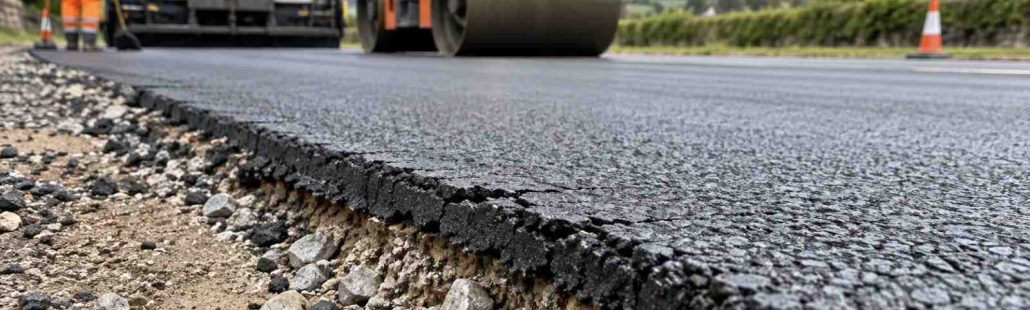
Professional machine lay tarmac helps produce a controlled, uniform finish across larger roads and commercial areas, although normal traffic and weather will inevitably alter the appearance over time.
A road is an operating surface rather than a decorative finish, so some visual change is entirely expected.
Why Commercial Entrances Often Show Dark Turning Marks
Industrial and commercial entrances are ideal places to see concentrated road wear.
HGVs may approach slowly, brake at the entrance and then make a tight turn onto the site.
Their tyres can scrub across the surface during the manoeuvre.
If vehicles follow the same route every day, visible darkening or polishing can develop surprisingly clearly.
The position of the marks can help site managers understand how vehicles are actually using the area.
It can also identify parts of the pavement that deserve closer monitoring for rutting, cracking and other signs of stress.
A Shiny Patch Doesn’t Automatically Mean the Road Needs Resurfacing
Visual differences alone are not enough to determine whether major road works are necessary.
A polished surface may remain structurally sound.
The condition becomes more concerning when it appears alongside other symptoms such as cracking, deformation, loose aggregate, potholes or persistent standing water.
The location and rate of change also matter.
A small area that has looked similar for years presents a different situation from a rapidly deteriorating wheel path on a heavily used commercial road.
Assessment should therefore consider the complete pavement condition.
Why Surface Specification Matters on Busy Roads
High-traffic areas need materials appropriate for their operating conditions.
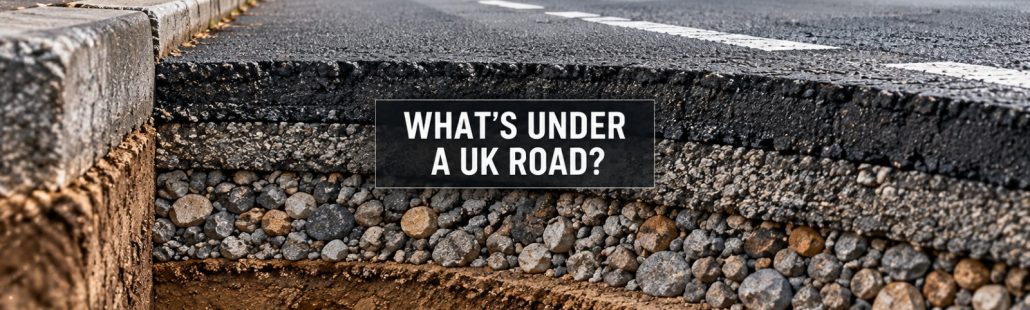
Aggregate characteristics, asphalt specification, pavement construction and expected vehicle movements all influence long-term performance.
A straight access road carrying light vehicles has different demands from a bus stop, roundabout or industrial junction.
This is why road surfacing should not be specified purely according to area or appearance.
Understanding where vehicles will brake, turn, stop and accelerate helps identify the sections likely to experience the greatest wear.
Those locations may require particular consideration during both construction and maintenance.
Regular Inspections Can Reveal Changes Early
Site managers do not need to wait for potholes before paying attention to a road.
Changes in appearance can provide useful early information.
Increasingly polished wheel paths, new dark patches, shallow depressions and areas that remain wet longer than the surrounding pavement are all worth monitoring.
Photographs taken periodically from the same position can make gradual changes easier to recognise.
The aim is not to treat every colour variation as a defect. It is to identify when a visual change accompanies physical deterioration.
Dark and Shiny Roads Tell a Story About Traffic
The appearance of an asphalt surface changes throughout its working life.
On busy roads, repeated tyre contact can polish exposed aggregate and create darker, smoother-looking wheel paths. Braking, turning and heavy vehicle movements can make the effect particularly obvious around junctions, roundabouts, bus stops and commercial entrances.
Other causes are possible too. Oil contamination, tyre deposits and standing water can all produce dark areas that look superficially similar.
For anyone investigating a shiny road surface UK site, the pattern and location of the discolouration provide useful clues.
Two continuous shiny tracks are very different from an isolated oil stain or a dark depression that remains after rainfall.
Most importantly, colour should be considered alongside physical condition. If the road remains level, intact and appropriately textured, a visual change does not automatically mean structural failure. If the shine accompanies rutting, cracking, loose material or persistent water, further investigation becomes much more important.
Busy roads reveal their traffic history on the surface. Those dark, polished patches are often one of the clearest places to see it.