
- Minisgreat
- No Comments
- September 11, 2026
The Problems Caused by Tarmac That’s Laid Too Thin
When a new driveway, access road or car park is finished, most people naturally judge the work by what they can see. They look at whether the surface is smooth, whether the edges are neat and whether rainwater drains correctly.
One of the most important aspects of the installation, however, is difficult to assess once the work has been completed: thickness.
Asphalt is designed to be installed at an appropriate compacted thickness for the material being used and the demands placed on the pavement. If the construction is inadequate, the finished area may initially look perfectly acceptable while lacking the strength required for long-term use.
Problems with tarmac laid too thin UK property owners encounter may not appear immediately. They often emerge after the surface has experienced repeated vehicle loading, temperature changes and wet weather.
By that point, correcting the problem can be considerably more involved than installing the appropriate construction in the first place.
Tarmac Doesn’t Work Independently of Its Foundation
Before considering surface thickness, it is important to understand that asphalt is only one part of a pavement.
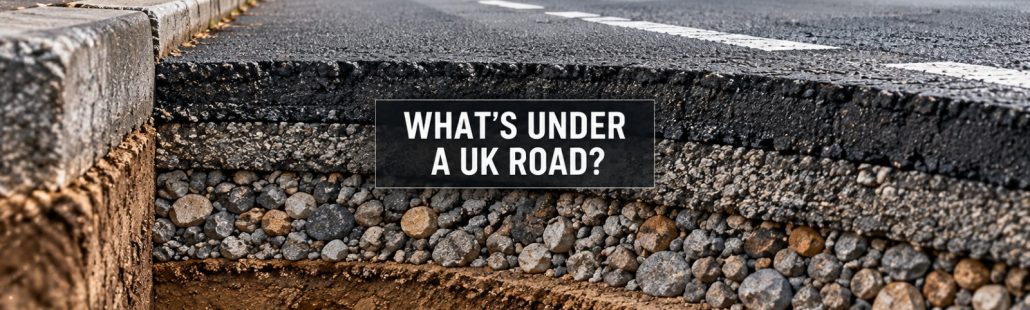
A typical road, driveway or commercial access area relies on prepared ground and supporting foundation layers underneath the asphalt. These layers work together to distribute vehicle loads.
Correct tarmac installation therefore involves much more than applying a black surface.
A thick asphalt layer cannot automatically compensate for a badly constructed foundation. Equally, an excellent foundation does not mean the asphalt above can simply be made as thin as possible.
Both parts of the pavement need to be appropriate for the intended use.
Thin Tarmac Has Less Material to Distribute Stress
Every time a tyre passes across a road, it transfers load into the pavement.
The pavement then distributes that stress through its different layers.
When an asphalt layer is inadequately thin, it has less structural depth through which to manage the stresses imposed by traffic. Weaknesses underneath may also influence the surface more readily.
Under repeated loading, the pavement can begin showing signs of distress.
This does not mean there is one universal minimum thickness suitable for every project. Asphalt specifications vary according to material, foundation, vehicle type and intended use.
The important principle is that the construction should be designed for the demands it will actually experience.
Cracking Can Develop Earlier
Premature cracking is one of the potential consequences of an inadequate asphalt construction.
A pavement flexes slightly as traffic passes across it. Properly designed layers are intended to accommodate expected loading without excessive movement.
Where the asphalt is insufficient for those conditions, repeated stresses can contribute to cracking.
Initially, cracks may be small and isolated. Continued traffic and weather exposure can cause them to extend or connect with other defects.
Once cracking becomes established, the pavement also becomes more vulnerable to water ingress.
Heavy Vehicles Reveal Weak Surfaces Faster
A driveway used by ordinary cars and a commercial yard receiving fully loaded HGVs are completely different environments.
Heavy vehicles transfer substantially greater loads into the pavement. They may also brake, turn and remain stationary in predictable areas.
A thin asphalt construction that appears satisfactory under light traffic can deteriorate much more rapidly once exposed to these heavier demands.
This is why professional commercial surfacing needs to consider vehicle type and traffic patterns before the pavement specification is determined.
The correct thickness should reflect actual site use rather than simply the size of the area being surfaced.
Wheel Paths Can Begin to Show Distress
Vehicles tend to follow predictable routes.
On a domestic driveway, cars usually enter and park in approximately the same position every day. On commercial premises, delivery vehicles often follow defined routes towards loading bays and entrances.
These repeated wheel paths concentrate loading.
If the pavement is inadequately constructed, deterioration may become noticeable in these areas first.
The rest of the surface can still look relatively good while the regular wheel tracks begin showing cracking, deformation or changes in level.
This uneven deterioration is often a useful indication that traffic loading is contributing to the problem.
Rutting Can Become a Serious Issue
Rutting appears as depressions following regular tyre paths.
There are several possible causes, including deformation within asphalt layers and movement in the supporting construction underneath.
An inadequately specified pavement can be more vulnerable to this type of distress when subjected to repeated traffic.
Once ruts become established, they create more than an appearance problem.
They alter the road profile and can begin trapping water.
A pavement that originally drained correctly may suddenly develop long puddles following the wheel tracks.
Turning Areas Are Particularly Demanding
Vehicles do not only place downward pressure on asphalt.
When they turn, their tyres also introduce lateral forces.
This becomes particularly significant around junctions, commercial entrances, loading areas and tight manoeuvring spaces.
HGVs with multiple axles can generate substantial tyre scrub during tight turns.
A pavement that is inadequate for these forces can deteriorate faster in turning areas than on straight sections.
This explains why a road can remain relatively sound along most of its length while repeatedly failing around a junction or entrance.
Braking and Acceleration Increase the Stress
Areas where vehicles regularly stop and start are another concern.
Braking transfers horizontal force into the road surface. Acceleration creates further stress as tyres push against the pavement.
Bus stops, security gates, car park exits and industrial entrances can therefore experience more demanding conditions than free-flowing sections.
The pavement specification needs to reflect these movements.
Simply applying a thin layer because the underlying surface appears reasonably solid may not provide an appropriate long-term solution in a high-stress location.
Thin Areas Can Occur Even When Most of the Surface Is Correct
Not every thickness problem affects an entire project uniformly.
Variations in the underlying levels can result in some locations receiving less material than others if the preparation and laying process are not properly controlled.
Those thinner sections can become local weak points.
Traffic may then cause deterioration in apparently random areas while the surrounding asphalt remains intact.
This is one reason consistent preparation and controlled installation matter across the whole pavement.
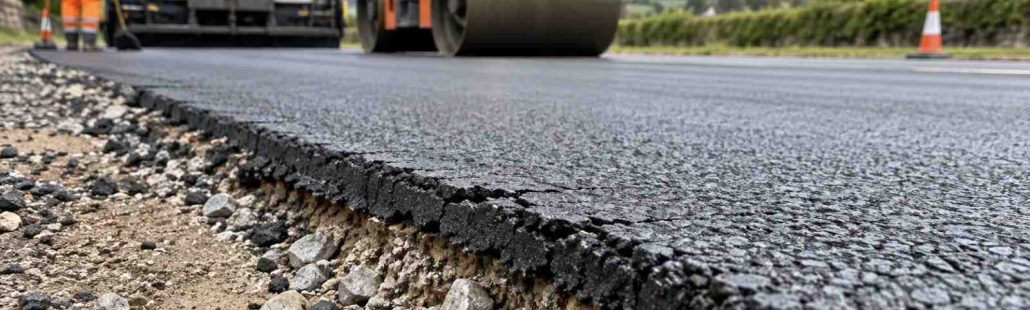
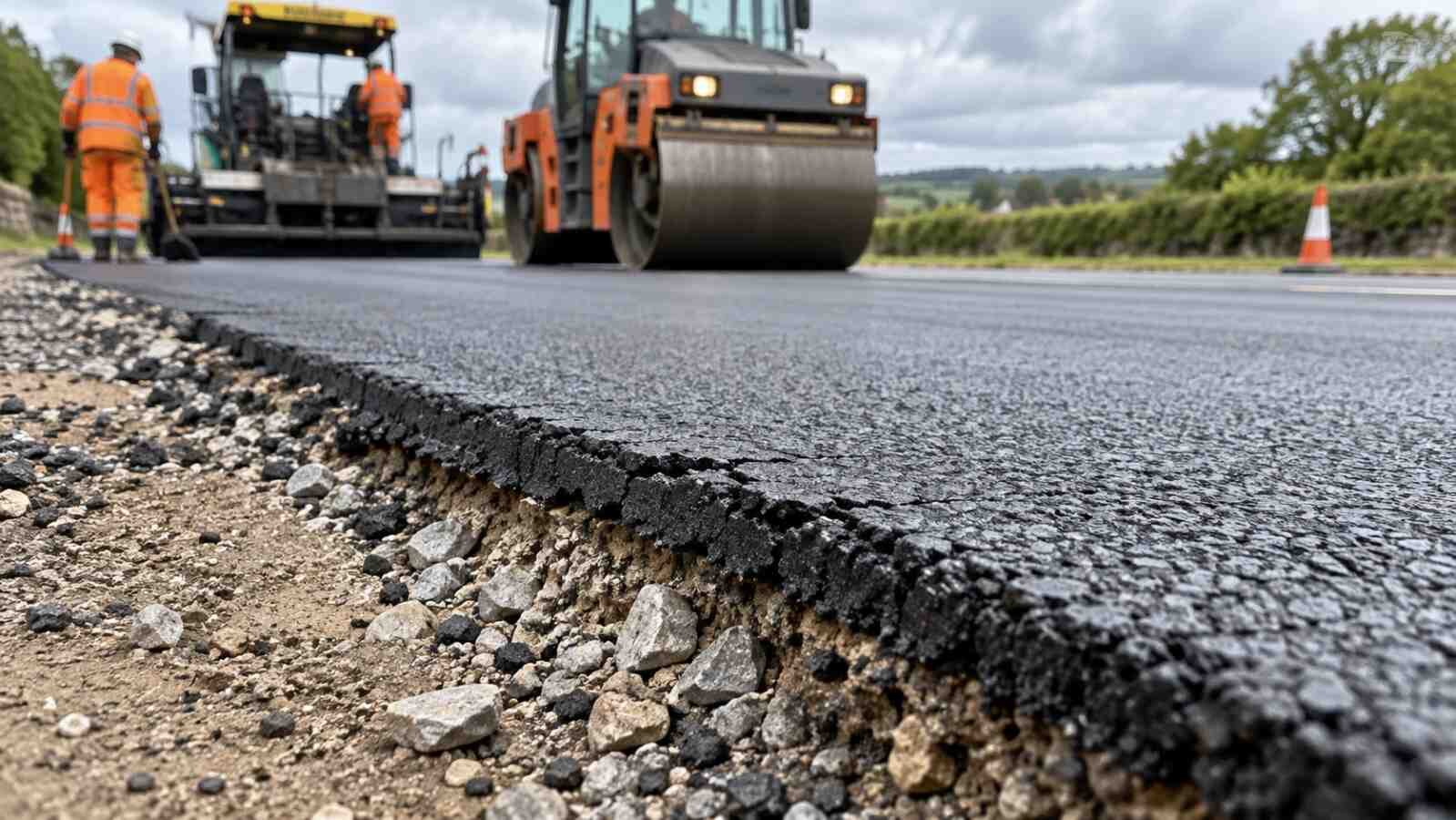
For larger projects, professional machine lay tarmac can help achieve controlled placement and a consistent finish when used as part of an appropriate surfacing specification.
Poor Compaction Can Make Matters Worse
Thickness and compaction need to be considered together.
Asphalt is placed and then compacted to achieve the intended finished construction. The specification therefore needs to account for the material after compaction rather than simply how thick it appeared when initially spread.
If installation is poorly controlled, the finished pavement may not achieve the required characteristics.
Correct compaction is particularly important because it contributes to the stability and durability of the asphalt.
Thickness alone is not a substitute for good workmanship, just as excellent compaction cannot make an fundamentally inadequate pavement specification suitable for heavy traffic.
Water Can Turn Small Defects Into Larger Ones
Once an inadequately constructed surface begins cracking, water becomes an additional concern.
Rainwater can enter openings and reach vulnerable parts of the pavement.
Repeated vehicle loading continues at the same time.
This combination can accelerate deterioration, particularly where drainage is already poor or water remains standing on the surface.
The visible damage may then progress from small cracks to broken edges, localised surface loss and eventually potholes.
Why Potholes May Appear Prematurely
A pothole is often the later stage of pavement deterioration rather than the original problem.
Cracking allows the road to become increasingly vulnerable. Water reaches weakened areas, traffic continues loading them and material begins breaking away.
Once loose material is removed by tyres, the defect can expand rapidly.
Professional pothole repairs should therefore consider why the pavement failed rather than simply replacing the material that has disappeared.
If the surrounding asphalt is also inadequately constructed, repeatedly filling individual holes may not provide a satisfactory long-term solution.
Thin Tarmac Over an Old Road Can Be Particularly Risky
Applying a new surface over an existing road can be an effective resurfacing technique when the pavement underneath is suitable.
Problems arise when a thin overlay is expected to hide significant structural defects.
Old cracks can remain active underneath. Depressions can indicate deeper movement. Existing rutting may reveal weaknesses that a light surface treatment cannot correct.
The newly resurfaced road may look excellent initially, but defects can eventually reappear.
The appropriate treatment depends on the condition of the existing pavement and the traffic it needs to support.
Reflective Cracking Can Reveal What’s Underneath
Suppose an existing road contains a substantial crack and a relatively thin new layer is installed over it without adequately addressing the underlying issue.
Movement can continue around the original defect.
Over time, that movement can transfer upwards through the new asphalt, producing a crack in a similar position.
This is known as reflective cracking.
The new surface has not necessarily created the original weakness. It has simply been unable to prevent the existing movement from becoming visible again.
Proper preparation before resurfacing is therefore critical.
Thin Surfacing Can Fail Around Edges
Road and driveway edges deserve particular attention because they may receive less lateral support than the main body of the pavement.
If an edge is inadequately constructed and vehicles regularly travel close to it, cracking and breakdown can begin.
Once the edge starts deteriorating, water can enter and material may gradually break away.
The damaged area can then work progressively inwards.
Good edge construction and appropriate pavement thickness both contribute to keeping these vulnerable areas stable.
More Tarmac Isn’t Automatically Better
It is equally important not to assume that simply making every asphalt layer as thick as possible guarantees a better road.
Road construction needs an appropriate specification.
Material type, layer thickness, foundation construction, drainage, compaction and traffic loading all work together.
Installing unnecessary material increases cost without automatically correcting weaknesses elsewhere.
The objective is not maximum thickness.
It is the correct construction for the specific site.
Domestic Driveways Still Need Proper Construction
A residential driveway does not normally experience the same loading as an industrial road, but that does not mean thickness is unimportant.
Cars repeatedly travel along similar wheel paths and may remain parked in the same positions for many hours.
Delivery vans, removal vehicles and building contractors can occasionally introduce heavier loads.
If a driveway has been constructed inadequately, these repeated loads can gradually expose weak areas.
A properly designed domestic surface should take normal vehicle use into account rather than relying on the fact that traffic volumes are relatively low.
Commercial Roads Need a Different Specification
Commercial sites can place considerably greater demands on asphalt.
A warehouse access road may carry HGVs throughout the day. A retail car park may experience continuous vehicle movements. An industrial yard may include tight turning areas where heavy vehicles repeatedly manoeuvre.
Using the same construction approach for every environment would ignore these differences.
The pavement needs to be designed around expected traffic, particularly the heaviest regular vehicles and the locations where they brake, turn and stop.
This is why discussing site use before surfacing begins is so important.
Can You Tell If Tarmac Is Too Thin by Looking at It?
Not reliably.
Once the work has been completed, the finished surface does not necessarily reveal its construction depth.
A thin surface can initially look just as smooth and dark as a correctly specified one.
Warning signs generally appear through performance.
Premature cracking, repeated deformation, edge breakdown and defects developing unusually quickly can all justify further investigation, although these symptoms can have several other causes as well.
Thickness should therefore not be diagnosed from appearance alone.
Why Early Failure Doesn’t Always Mean the Surface Layer Is Too Thin
When relatively new tarmac fails, it can be tempting to immediately blame insufficient thickness.
That is only one possibility.
Weak sub-base material, poor drainage, inadequate compaction, unsuitable asphalt, unexpected heavy traffic and movement in the ground underneath can produce similar symptoms.
Several factors may also be acting together.
A proper assessment should therefore look at the whole pavement rather than assuming that adding another layer of asphalt will automatically solve the problem.
Repairing Thin Tarmac Depends on the Underlying Condition
The correct repair depends on how extensively the pavement has failed and what is underneath it.
Where the foundation remains sound and the problem is confined to the upper asphalt construction, resurfacing may be possible after suitable preparation.
Where significant structural movement exists, deeper reconstruction may be required.
Weak areas need to be addressed before the final surface is restored.
Otherwise, the repaired pavement can begin showing the same defects again.
Correct Thickness Is About Long-Term Performance
The problems caused by tarmac laid too thin UK property owners encounter are rarely about appearance on installation day.
They are about what happens after thousands of vehicle movements and repeated exposure to British weather.
An inadequate asphalt construction can be more vulnerable to cracking, deformation, rutting and edge deterioration. Once defects allow water into the pavement, deterioration can progress further and eventually result in potholes or larger failed areas.
Correct road surfacing therefore requires a complete approach.
The foundation needs to be suitable, drainage needs to work, asphalt materials need to match the application and the pavement layers need to be installed and compacted appropriately for the traffic expected.
The finished road may only show a black surface, but its ability to last depends on getting far more than that final visible layer right.